Why Your Company's AI Policy Is Failing: How Singapore Office Workers Actually Use ChatGPT and Copilot at Work
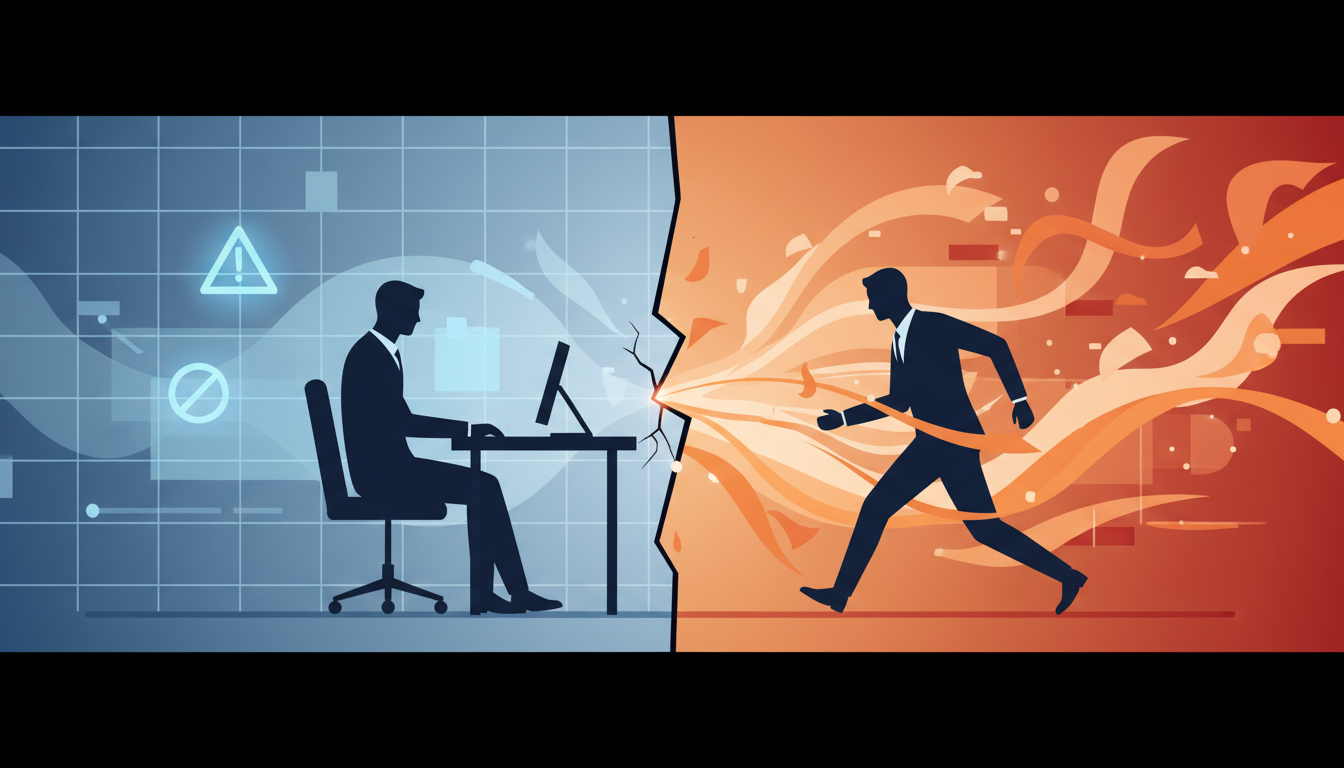
Here's a secret your IT department doesn't want to admit: while your company's official policy says "no ChatGPT, no Copilot, data protection reasons lah," half your colleagues are already using them to clear their emails before lunch. They're drafting reports, generating Excel formulas, and summarising 50-page documents—gaining 20-30% time savings according to productivity research cited in Singapore policy discussions. And now? Budget 2026 just announced the government is training 100,000 workers in AI application skills with six months of free premium tool access starting H2 2026. Your company banned these tools. The Singapore government is paying workers to learn them. Something doesn't add up.
The Gap Between Company AI Policy and What Office Workers Actually Do
Let's talk about what's actually happening in Singapore offices in 2026. Your company probably has one of three AI policies: an outright ban on tools like ChatGPT citing data protection concerns, a vague 'we're evaluating' stance that means nothing gets approved, or radio silence while leadership figures out what AI even is. Meanwhile, workers, especially diploma-educated office staff who handle the bulk of administrative work - have quietly figured out that these tools genuinely help them do their jobs better.
They're using ChatGPT to draft client-facing emails that don't sound robotic. They're asking Microsoft Copilot to explain complex Excel functions instead of bothering the one colleague who actually understands VLOOKUP. They're feeding meeting notes into AI tools to generate action item summaries in seconds instead of spending an hour retyping everything. This isn't workers being reckless, it's workers adapting to workload realities that leadership doesn't see from the C-suite.
The disconnect is real and measurable. According to global productivity research cited in Singapore's policy discussions, office workers using AI tools report 20-30% time savings on routine tasks. But here's the problem: because these workers are using tools against company policy, nobody's tracking those gains, nobody's managing the risks, and leadership remains completely blind to both the productivity boost and the PDPA compliance exposure.
What Budget 2026 Reveals About Singapore's AI Strategy (While Your Company Stays Stuck)
In March 2026, the Singapore government announced something notable: they're going to train 100,000 workers in AI application skills and provide six months of free premium access to AI tools for course completers starting in the second half of 2026. This follows 606,000 workers who already joined subsidised SkillsFuture AI programmes in 2025. Surely everyone can see the government is actively pushing workers to use the exact tools many companies are banning.
The 'Champions of AI' programme isn't some distant pilot project. It's targeting companies to embed AI in core operations across manufacturing, finance, healthcare, and connectivity sectors with actual datasets and sandboxes to experiment. SkillsFuture Singapore is partnering with Singapore Institute of Technology to launch an AI readiness self-diagnostic tool on the MySkillsFuture portal by Q2 2026, complete with worker archetype-specific course recommendations.
Here's what this means for your company's 'we ban AI for security reasons' policy: the national strategy is moving in the exact opposite direction. While your IT department writes memos about data sovereignty, GovTech is building frameworks to integrate these tools safely. The gap between corporate policy and national direction has never been wider, and workers caught in the middle are making their own choices.
The Real PDPA Compliance Risks When Workers Use ChatGPT Without Company Guidelines
Now before we paint this as a simple 'management bad, workers good' story, there are genuine risks here, and they're more serious than most workers realise. The main issue isn't that ChatGPT will suddenly become sentient and steal your company secrets. The issue is that most Singapore office workers don't actually know where their data goes when they paste that client email into ChatGPT's text box.
ChatGPT's free tier is hosted on servers outside Singapore. When you input customer names, project details, or internal communications, you're potentially violating Singapore's Personal Data Protection Act (PDPA) without even knowing it. The PDPA requires that personal data be protected with reasonable security arrangements, and sending it to a third-party AI service that may use it for model training doesn't typically meet that bar. Your company could face Personal Data Protection Commission (PDPC) investigations not because of a sophisticated cyberattack, but because Karen in Accounts pasted the customer database into an AI tool to sort it faster.
Then there's the Workplace Fairness Act 2025, which requires traceable AI outputs in HR decisions with mandatory human oversight to prevent discrimination. If your HR team is using AI for recruitment screening or performance analysis—and many are—but your company has no governance framework because the official policy is 'we don't use AI,' you're in a compliance grey zone that could get expensive fast. The risk isn't using AI tools. The risk is using them without knowing how, why, or with what safeguards.
Why Blanket AI Bans Don't Work (And How Workers Are Bypassing Them)
Here's the uncomfortable truth: blanket AI bans are the corporate equivalent of abstinence-only education. They sound safe on paper, they make legal departments feel better, and they achieve absolutely nothing except pushing the behaviour underground where you can't see or manage it.
Workers bypass bans because the tools genuinely solve real problems. If you're an executive assistant managing calendars for five people, ChatGPT can draft meeting agenda emails in 30 seconds instead of 10 minutes. If you're in operations and need to summarise vendor contracts, AI tools can pull key terms faster than you can Ctrl+F through 40 pages. If you're in customer service and get the same questions 50 times a day, Copilot can help you write responses that don't sound copy-pasted. These aren't frivolous use cases, they're the difference between leaving the office at 6pm or 9pm.
The smart workers—and yes, they exist, diploma or not—are learning to use these tools with guardrails they create themselves. They avoid pasting customer names or sensitive financials. They double-check outputs instead of blindly trusting them. They use AI for first drafts, not final submissions. But they're doing this alone, without training, without company support, and without any way to report issues when things go wrong. That's not a security strategy. That's just crossing your fingers and hoping nobody gets caught.
What Leadership Doesn't Know About ChatGPT and Copilot Usage (And Why Ignorance Is Expensive)
The most striking thing about Singapore's corporate AI policy failures isn't the policies themselves—it's that leadership genuinely doesn't know what's happening three levels below them. While C-suite executives discuss partnerships with AI vendors and debate whether to license Sea-LION LLM or some other solution, their own staff are using OpenAI and Microsoft tools because they're accessible, fast, and—critically—they actually work right now.
There's a reason workers favour ChatGPT and Copilot over whatever enterprise solution IT is piloting: consumer AI tools are designed for ease of use, they have massive user communities sharing tips, and they deliver immediate value without requiring three approval layers and a vendor demo. Leadership sees 'non-approved software' as a compliance risk. Workers see 'approved software' as vaporware that'll arrive in 18 months after the procurement process completes.
This ignorance has real costs. Companies are reducing in-house training investments while pushing workers toward self-serve AI tools, amplifying the exact skills gap the government is trying to close with that 100,000-worker training target. HR departments are accelerating AI adoption for recruitment and performance forecasting, but personal worker usage of the same tools escapes governance oversight entirely. You end up with a situation where the company uses AI to analyse workers, but has no idea workers are using AI to do their jobs and no framework to ensure either use case is done responsibly.
How to Fix Your Company's AI Policy Before the Compliance Risks Catch Up
If you're a worker using these tools on the sly: you're not wrong for wanting to be productive, but you need to understand the risks you're taking—especially around data protection. Don't paste customer data, employee records, or confidential project information into free-tier AI tools. Use them for drafting and brainstorming, not for processing sensitive information. And push your company to create actual AI usage guidelines instead of blanket bans that help nobody.
If you're in management or HR: your policy isn't working. You know it's not working. Pretending workers aren't using AI tools doesn't protect your company—it just means you can't manage the risks or capture the productivity gains. Look at what the government is doing with Budget 2026 and ask yourself: if Singapore is training 100,000 workers to use AI and providing free premium tool access, why is your company still debating whether to allow it at all?
The Workplace Fairness Act 2025 requires traceable AI outputs and human oversight in HR decisions. If you're using AI for hiring, promotions, or performance reviews without a governance framework, you're more exposed than if you just let workers use ChatGPT for emails with proper guidelines. The solution isn't to ban everything. It's to create clear, enforceable policies that acknowledge reality: AI tools are already here in 2026, your workers are already using them, and the question is whether you want visibility and control or wilful ignorance and liability.
◆Key Takeaway
Here's what you can do right now, whether you're a worker or in leadership.
Workers: if your company offers SkillsFuture AI courses, take them! Especially since H2 2026 brings six months of free premium AI tool access! Learn to use these tools properly, with awareness of PDPA data protection rules and output verification. Check the MySkillsFuture portal in Q2 2026 for the new AI readiness diagnostic tool. And if you're already using AI tools at work, document what's working and what isn't, that's evidence for the business case when policies eventually change.
Leadership: stop pretending the problem doesn't exist. Survey your workers anonymously about actual AI tool usage, then use that data to build realistic policies that balance productivity with PDPA compliance. Partner with IMDA and PDPC for guidance, they're already helping Singapore companies navigate this exact problem. And recognise that the government's 100,000-worker training target isn't abstract policy, it's workers in your company, learning to use tools you're currently banning. Align your internal strategy with the national direction, or watch your best talent leave for companies that do.
This article reflects the author's personal views and analysis, not professional technology consulting advice. Just an idiot who experiments a lot and has a website
The author advocates for responsible AI use and may hold critical views of certain companies and their practices.